
The 21 best finance podcasts [2023]
February 17, 2023


The Fair Credit Reporting Act (FCRA) is a law that requires privacy, fairness and accuracy with your consumer credit information. It defines how credit reporting agencies, data furnishers and other entities can use, collect, access and share your data.
U.S. Congress passed the FCRA in 1970 to protect consumer information from any misuse of their information. The FCRA is enforced by both the Consumer Financial Protection Bureau (CPFB) and the Federal Trade Commission (FTC).
Below, we’ll dive into the purpose of the FCRA, how it protects you and other things you need to know.
The purpose of the FCRA is to ensure your credit information is fairly reported and to make sure you know the rights you have over your information.
Having clearly defined rights over how your information is used is important, when mass hacks and identity theft are common. Unauthorized use of information can result in marks that unfairly hurt your credit. Examples of this are maxed out credit cards and too many open accounts that either don’t belong to you or happen when your identity is stolen.
Having clear regulations is also important since credit impacts so many things. Here’s a list of a few ways credit affects you:
The FCRA defines and enforces rules on how information on your credit report can be accessed and used. Below are a few key parts of the FCRA outlined by the FTC.
In addition, they must give you the name, address and phone number of the credit reporting agency who gave them your information.
A few instances include: When you’re unemployed but expect to apply for a job within 60 days, when you’re a victim of identity theft, or if you’re on public assistance. You’re also entitled to a free credit report from each credit bureau every 12 months through Annual Credit Report.
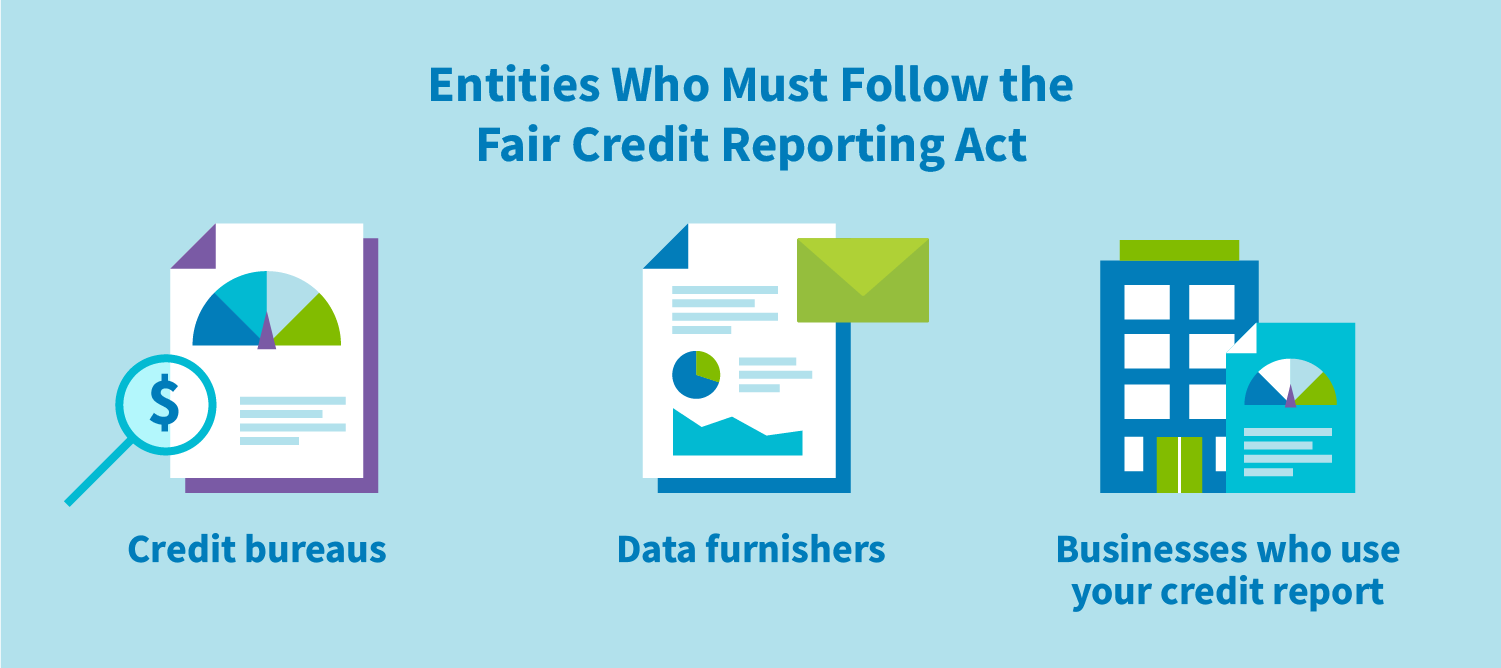
The FCRA applies to the three major credit bureaus (Experian®, TransUnion® and Equifax®) in addition to all of the organizations that collect information that impacts your credit, like banks and credit card companies, and those that use your information to make decisions, like apartment complexes. Each entity has a handful of rules that they must follow.
Below, we’ll explain what rights you have in relation to all of these entities so you understand what standards they’re held to, what actions you’re entitled to take when your rights are violated and who is responsible for what.
As the entity that mainly holds and manages your consumer credit data, the credit bureaus are held to clear standards to ensure your information is safe and fairly used. Here are a few rights guaranteed by the FCRA in regards to the consumer credit reporting agencies.
Data furnishers are the groups that provide credit bureaus with your information. Common data furnishers are credit card companies and student loan companies. They are required to fairly and accurately report your information to the credit bureaus. Below are the rules enforced by the FCRA that data furnishers must follow.
Those who use information from your credit report must also follow their own sets of guidelines. Apartment complexes fall under this category since many use your credit report or credit score as a part of their screening process. Insurance companies can also fall under this category since some use your credit score to determine your premium. We’ve listed out a couple requirements below for these groups you should know.
If you think your information isn’t handled fairly, you’re within your rights to contact your creditor, lender and the credit bureaus to let them know of the situation. You can also contact a credit repair professional if you’re unsure if your rights were violated or not sure about what steps to take. Get in touch with a credit repair consultant to learn about your options.